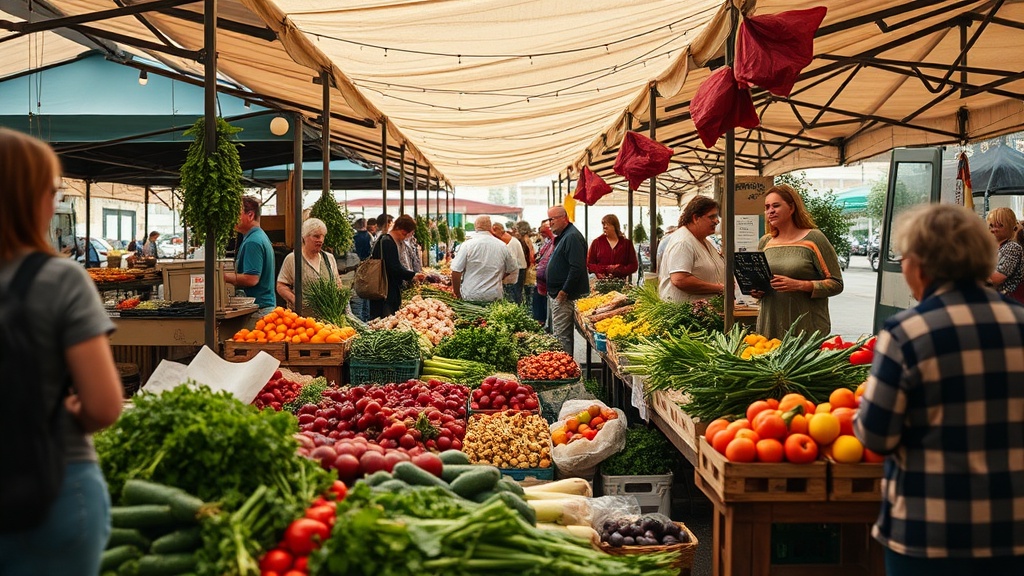
Norfolk County Farmers Market: A Community Hub for Local Produce and Connection

The Norfolk County Farmers Market isn't just a place to pick up tomatoes—it's where neighbours catch up, farmers share stories, and our community's agricultural heritage comes alive every week. This post covers everything you need to know about the market: where to find it, what makes it special, and why supporting local growers matters for Norfolk County's economy and food security.
Where Is the Norfolk County Farmers Market Located?
The Norfolk County Farmers Market operates at the Simcoe Fairgrounds at 926 Norfolk Street South in Simcoe, Ontario. You'll find vendors set up in the main exhibition building and spilling out onto the surrounding grounds every Saturday morning from May through October. Parking is plentiful (and free), making it easy to load up on fresh produce without circling for a spot.
The fairgrounds location serves our community well—central enough for Simcoe residents, accessible via Highway 24 for folks coming from Delhi or Port Dover. The indoor-outdoor setup means market day happens rain or shine. Voters in Norfolk County approved renovations to the fairgrounds back in 2019, and those upgrades improved drainage and added covered walkways that shoppers appreciate during our unpredictable Ontario weather.
Winter markets move to the Norfolk Community Help Centre on Colborne Street, keeping local food accessible even when the snow flies. That continuity matters. Families build Saturday routines around these gatherings—coffee in hand, reusable bags at the ready, checking in with growers who've become friends over years of weekly visits.
What Can You Buy at the Norfolk County Farmers Market?
You'll find seasonal fruits and vegetables, pasture-raised meats, farm-fresh eggs, artisanal baked goods, local honey, cut flowers, and handmade crafts from Norfolk County producers. The selection changes with the growing season—expect asparagus and rhubarb in May, peaches and tomatoes in August, pumpkins and squash come October.
Here's what a typical shopping trip might yield throughout the season:
| Season | Produce Highlights | Typical Vendors |
|---|---|---|
| Spring (May–June) | Asparagus, rhubarb, spinach, greenhouse tomatoes, early herbs | 3–4 produce growers, 2 bakeries, plant starts |
| Summer (July–August) | Peaches, berries, sweet corn, tomatoes, peppers, zucchini | 12–15 vendors, live music weeks |
| Fall (Sept–October) | Apples, pumpkins, squash, root vegetables, late tomatoes | 10–12 vendors, craft artisans |
| Winter (Nov–April) | Storage crops, preserves, greenhouse greens, baked goods | 5–6 vendors at indoor location |
Several Norfolk County farms have become institution staples. Blueberry Hill Estate brings wine and fruit from their Niagara Escarpment property—their hard ciders have developed quite a following among locals. Pardo's Farm out of La Salette consistently sells out of their free-range eggs before noon. And you haven't tasted real butter tarts until you've tried the ones from the Mennonite bakery stall (no website—they're old school, cash only, worth arriving early for).
Why Does Buying Local Matter for Norfolk County?
Buying local keeps money circulating within Norfolk County, supports family farms facing rising operational costs, and reduces the environmental impact of food transportation. The Norfolk County municipal government recognizes agriculture as a foundational economic sector—and farmers markets directly strengthen that base.
The numbers tell part of the story. When you spend $10 at a chain grocery store, roughly $1.40 stays in the local economy. Spend that same $10 with a Norfolk County farmer, and over $7 recirculates locally—through farm employees, equipment purchases, and the farmer's own community spending. That multiplier effect builds prosperity across our towns.
There's a food security angle too. Norfolk County sits in one of Ontario's most productive agricultural regions—the "Garden of Ontario" isn't just marketing. Our sandy loam soil and moderating lake effects create ideal growing conditions. Yet many residents buy produce shipped from California or Mexico while local farmers sometimes struggle to find buyers. The market bridges that gap, connecting eaters with the people growing food within 50 kilometres of their kitchen tables.
The Social Fabric of Market Day
Walk through the Norfolk County Farmers Market on any Saturday morning, and you'll witness something increasingly rare—genuine community interaction. Retired farmers comparing notes on the growing season. Young parents teaching kids that carrots come from dirt, not plastic bags. The mayor chatting with constituents over coffee from a local roaster's pop-up.
This social dimension shouldn't be underestimated. In an era of screen-mediated relationships, the market offers face-to-face connection. Vendor relationships build over years. You'll learn which apple varieties hold up best in storage, when to expect the first asparagus, how to prepare kohlrabi (it's delicious roasted with garlic—trust us). That knowledge transfer—the kind that happens through conversation, not Google searches—enriches our community's collective wisdom about food.
The market also serves as an informal small business incubator. Several Norfolk County food companies started as market stalls before expanding to retail stores or wholesale distribution. That entrepreneurship pipeline matters in a region where traditional manufacturing employment has declined. Today's table vendor might be tomorrow's employer.
Getting the Most from Your Visit
Arrive early for best selection—popular items like heritage tomatoes or pastured chicken sell out fast. Bring cash (though most vendors now accept e-transfer or cards), reusable bags, and a cooler if you're buying meat or dairy. Don't rush. The market rewards those who linger, sample, and ask questions.
Here are some practical tips from regular Norfolk County shoppers:
- Build relationships—vendors often set aside preferred items for familiar faces
- Ask about seconds—imperfect produce sells at a discount, perfect for canning or sauce
- Buy in season, buy in bulk—August tomatoes freeze beautifully for winter cooking
- Check the market's social media—vendors post availability updates and special offerings
- Bring the kids—many vendors offer samples, and the atmosphere is family-friendly
The Norfolk County Farmers Market runs Saturdays 8am–12pm during outdoor season. Winter hours shift to 10am–2pm on select Saturdays—check the market's website for current dates. Admission is free, though you'll definitely want to bring money for shopping (and maybe a breakfast crepe from that food truck parked near the entrance).
Whether you're a longtime Norfolk County resident or new to the area, the farmers market offers something grocery stores simply can't replicate—connection to place, to people, and to the rhythms of our local growing season. The tomatoes taste better because you know who grew them. The community feels stronger because you see your neighbours there. And our agricultural heritage stays vital because we support it directly, one Saturday morning at a time.