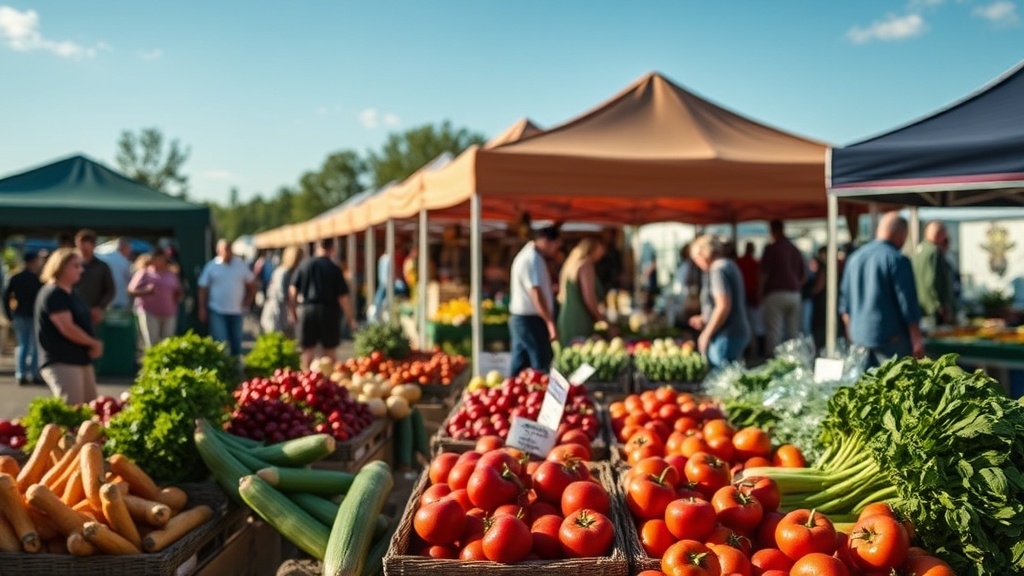
Norfolk County Farmers Market Season Returns to Simcoe This May

When and Where Is the Norfolk County Farmers Market Held?
The Norfolk County Farmers Market operates Saturdays from 8 a.m. to noon, running May 3 through October 25, 2025. You'll find it in the parking lot behind the Simcoe Recreation Centre on Talbot Street North—a location that's central enough for easy access but with enough space for vendor stalls and customer parking.
This isn't a new setup. The market's called this spot home for over a decade, and there's a reason it hasn't moved. The arena parking lot offers flat, accessible ground for strollers and mobility devices. There's shade from the building during hot midsummer mornings. And when the weather turns (because this is Norfolk County—weather always turns), the covered arena entrance provides shelter for shoppers caught in sudden rain.
The 2025 season brings some changes. Vendor spots have expanded from thirty-eight to forty-five, and the layout's been reconfigured with wider aisles. The county's Public Health unit helped redesign the flow to reduce congestion during peak hours. That matters when you're handling with a coffee in one hand and a bag of produce in the other.
What Can You Actually Buy at the Simcoe Market?
The short answer: food grown, raised, or made by people who live in Norfolk County or immediately adjacent areas. The longer answer involves specific vendors, seasonal availability, and the kind of product knowledge you won't find in a supermarket.
Stoltz Farm—run by a Mennonite family farming near Vanessa—brings vegetables through the entire season. Early May means asparagus and rhubarb. By July, their tables hold tomatoes, peppers, cucumbers, zucchini. Come October, it's squash, pumpkins, root vegetables. Their cut flowers (sunflowers, zinnias, dahlias) appear from July through first frost.
Willow Creek Meats, operating from a farm near Windham Centre, sells pasture-raised beef and lamb. They bring ground beef, steaks, roasts, and sausages—frozen solid, packed in insulated bags for the ride home. Their animals graze on grass you can see from Regional Road 45. That's not marketing; that's geography.
Backroads Bakery sourdough loaves consistently sell out by 9:30 a.m. If you want bread, arrive early. Their butter tarts (plain, raisin, or pecan) have developed a local following—people have opinions about the filling-to-pastry ratio. These aren't mass-produced; they're made in small batches Thursday and Friday for Saturday sale.
Simcoe Honey House offers raw honey, beeswax candles, and propolis products. The honey carries local pollen—some believe this helps with seasonal allergies (the science is mixed, but the honey is genuinely local). Pine Ridge Poultry brings free-range eggs and occasionally whole chickens, though protein vendors tend to sell out fastest.
Here's the thing: inventory changes weekly. Weather affects harvests. Animals produce eggs on their own schedule. The market teaches flexibility—you shop based on what's available, not based on a rigid list.
How Do Prices Compare to Grocery Stores?
Let's look at actual numbers from the 2024 season:
| Item | Market Price | Grocery Store Price | Notes |
|---|---|---|---|
| Dozen free-range eggs | $6.50 - $7.50 | $5.99 - $8.99 | Market eggs typically 3-4 days old vs. 2-3 weeks for stores |
| Heirloom tomatoes (per lb) | $3.50 - $4.50 | $4.99 - $6.99 | Grocery stores often import from Mexico even in summer |
| Sweet corn (dozen) | $6.00 - $7.00 | $5.99 - $7.99 | Market corn picked morning of; grocery corn can be weeks old |
| Grass-fed ground beef (per lb) | $8.00 - $9.50 | $9.99 - $12.99 | Market meat from traceable Norfolk County sources |
| Raw honey (500g) | $12.00 - $15.00 | $10.99 - $16.99 | Local pollen profile; supports area bee populations |
The table doesn't capture everything. Market tomatoes don't get refrigerated during transport—which destroys flavor compounds. Market beef comes from cattle you can drive past on Highway 24. Market honey supports pollinators that service Norfolk County's orchards and crops. The value extends beyond the price tag.
That said, the market won't replace your entire grocery run. You won't find bananas, coffee, or olive oil—products that can't be produced in southwestern Ontario's climate. Think of it as a supplement, not a substitute.
What Makes the 2025 Season Different?
Beyond the expanded vendor count and redesigned layout, this year introduces a pilot program with Norfolk County Social Services that doubles SNAP benefits for eligible residents. Fresh produce becomes accessible across income levels—food security addressed practically, not theoretically.
The craft vendor rotation also changes monthly. May features potters and woodworkers. June shifts to textile artists and jewelry makers. July brings metalworkers and glass artists. This keeps the market from becoming predictable and gives regular shoppers something new to discover.
The Norfolk County Public Library runs a pop-up book exchange on the first Saturday of each month—bring a book, take a book, no money involved. Local musicians play acoustic sets from 9 a.m. to 11 a.m. most Saturdays. It's background, not performance. Conversation remains possible.
What's the Best Strategy for Shopping?
Experienced shoppers arrive by 8:15 a.m. and walk the entire market once before buying. This lets you compare quality and prices—one vendor's beans might look better than another's. Popular items (heritage pork cuts, certain baked goods, early-season asparagus) often sell out by 9:30 a.m.
Protein vendors deserve first stop. Willow Creek Meats and Pine Ridge Poultry regularly sell out of popular cuts. After protein, move to produce that's limited—fresh herbs, specialty greens, berries. Save staples (root vegetables, cabbage, winter squash) for last since supplies hold steady.
Bring cash, though most vendors now accept e-Transfer or debit. Bring reusable bags—sturdy ones. A flat of berries or a dozen cobs of corn gets heavy. Bring a cooler bag if you're buying meat or dairy; these products need to stay cold, especially on warm May mornings when the sun's already strong by 9 a.m.
Wear shoes you don't mind getting dusty. The lot drains well, but morning dew lingers. Parking is ample but fills quickly—arrive before 8:30 a.m. for the best spots, including accessible parking near the entrance.
What's the Social Aspect Really Like?
The market functions as informal community infrastructure. You'll run into neighbors. You'll hear about road closures, school events, who's hiring. The information booth—staffed by volunteers from the Simcoe BIA—distributes flyers for local happenings and collects feedback.
There's etiquette to learn. Handle produce carefully—those peaches bruise. Ask "Do you spray?" or "How do you handle pests?" rather than "Is this organic?" Many Norfolk County farmers follow organic practices without pursuing certification (expensive, paperwork-intensive, not always suited to small-scale operations). You'll get honest answers to honest questions.
The pace matters too. Saturday morning at the market isn't rushed. People chat. They catch up. If you're in a hurry, the person ahead of you discussing their garden with the tomato vendor might test your patience—but they're participating in the market's actual function. Community building takes longer than transactional shopping.
The catch? If efficiency matters most, arrive right at 8 a.m. The first hour attracts serious shoppers who know what they want. After 10 a.m., families arrive. Neighbors linger. The market shifts from commerce to social space.
Why Does Any of This Matter?
Strong local markets strengthen towns. They create gathering places where neighbors recognize each other, where information flows informally, where the character of a place becomes visible. Simcoe's market does this without pretension—it's not designed for Instagram tourism; it's a working market for working people.
Buying local in Norfolk County reduces food miles dramatically. A tomato from Mexico travels roughly 3,200 kilometers. A tomato from Pineview Farms near Port Dover travels about 40. That math matters—transportation accounts for significant agricultural emissions, and long-distance refrigeration consumes substantial energy.
Plus, Norfolk County's small farms use less packaging. Asparagus comes in rubber-banded bunches, not clamshell containers. Berries come in cardboard baskets. Bring your own bags and you can achieve near-zero waste for much of your shopping.
Most importantly, money spent here circulates within Norfolk County. Vendors pay taxes here. Their children attend Grand Erie District School Board schools. They hire local services. The economic impact extends beyond the transaction.
The 2025 season runs Saturdays, 8 a.m. to noon, May 3 through October 25. Check the Simcoe Farmers Market website or their Facebook page for weekly vendor lists and weather cancellations (posted by 7 a.m. if conditions are questionable). Some vendors take pre-orders for pickup—worth doing if you're after something specific.
Markets like this one don't survive on nostalgia. They survive because they serve real purposes for real people. Norfolk County residents have kept this market alive through changing seasons, economic shifts, and the general busyness of modern life. That's worth showing up for.